
Rotavator vs Cultivator: Which Farm Implement Gives Better Results?

Introduction
Did you know that choosing the right farm implement can reduce land preparation time by up to 40%? Many farmers invest in quality seeds and fertilizers but still struggle with uneven soil preparation. That’s where the debate of Rotavator vs Cultivator: Which Farm Implement Gives Better Results? becomes important.
Both tools play a crucial role in modern agriculture, yet they serve different purposes. A rotavator focuses on intensive soil pulverization, while a cultivator is designed for loosening soil and weed control. In this article, we’ll break down their working, benefits, costs, and ideal use cases. Whether you’re planning to upgrade your equipment or comparing options based on cultivator price and performance, this guide will help you make an informed decision—especially if you’re considering trusted solutions from Fieldking.
Understanding Farm Implements in Modern Agriculture
Farm implements are no longer optional—they are essential for efficient, timely, and profitable farming. The right equipment improves soil health, saves labor, and increases crop yield.
Why Choosing the Right Implement Matters
Reduces fuel and labor costs
Improves seed germination
Enhances soil structure
Ensures timely farm operations
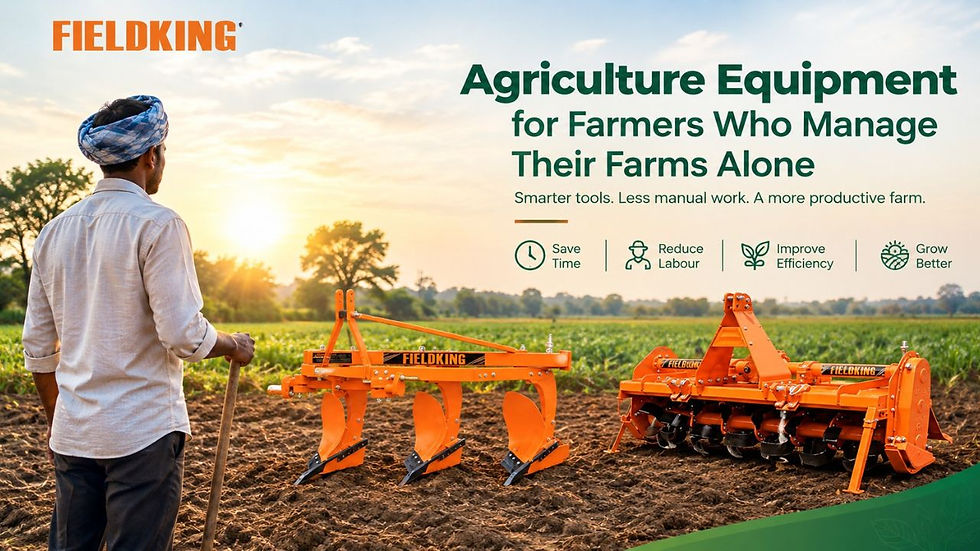
Fieldking offers a wide range of farm implement solutions designed specifically for Indian soil and farming conditions, helping farmers maximize productivity with reliability.
What Is a Rotavator?
A rotavator is a tractor-mounted implement that uses rotating blades to pulverize soil, mix crop residue, and prepare a fine seedbed in a single pass.
Key Features of a Rotavator
High-speed rotating blades
Deep soil pulverization
Effective residue mixing
Suitable for dry and semi-wet land
Benefits of Using a Rotavator
Saves time by completing multiple tasks at once
Improves soil aeration
Reduces weed growth
Ideal for seedbed preparation
Fieldking rotavators are known for their heavy-duty gearbox, strong blades, and precise depth control, making them a preferred choice for modern farmers.
What Is a Cultivator?
A cultivator is primarily used to loosen soil, control weeds, and aerate the land without excessive soil pulverization.
Key Features of a Cultivator
Tines or shovels for shallow tillage
Lower power requirement
Ideal for intercultural operations
Benefits of Using a Cultivator
Helps in weed management
Improves soil aeration
Maintains soil moisture
Lower cultivator price compared to heavy implements
Fieldking cultivators are designed for strength, balance, and smooth operation, suitable for both small and large farms.
Rotavator vs Cultivator: Key Differences
1. Working Depth & Soil Impact
Rotavator: Deep tillage with fine soil pulverization
Cultivator: Shallow tillage, maintains soil structure
2. Purpose
Rotavator: Primary land preparation
Cultivator: Secondary tillage and weed control
3. Fuel & Power Requirement
Rotavator: Higher fuel consumption
Cultivator: More fuel-efficient
4. Cost Comparison
Cultivator price is generally lower
Rotavators cost more but offer multi-functionality
Which Farm Implement Gives Better Results?
The answer depends on your farming needs.
Choose a Rotavator If:
You want fine seedbed preparation
You practice mechanized farming
You want faster land preparation
You grow crops like wheat, paddy, or sugarcane
Choose a Cultivator If:
You focus on weed control
You need soil loosening between crop rows
You want a budget-friendly solution
You prefer lower fuel consumption
Many progressive farmers use both implements at different stages for best results—something Fieldking strongly supports with its diverse product range.
Step-by-Step Guide: Choosing the Right Implement
Identify your crop type
Check tractor HP compatibility
Understand soil conditions
Compare cultivator price vs long-term benefits
Choose a reliable brand like Fieldking
Cost Analysis: Rotavator vs Cultivator Price
Cultivator price: Affordable, low maintenance
Rotavator: Higher initial cost, better efficiency
Fieldking ensures competitive pricing, strong after-sales support, and long service life—making both options a smart investment.
FAQs: Rotavator vs Cultivator
Q1. Can a cultivator replace a rotavator?
No. A cultivator cannot achieve the fine pulverization that a rotavator provides.
Q2. Which is better for Indian farming?
Both are essential. Rotavators suit primary tillage, while cultivators excel in secondary operations.
Q3. Is cultivator price worth it for small farmers?
Yes. Cultivators are cost-effective and ideal for small landholdings.
Q4. Does Fieldking offer both implements?
Yes. Fieldking offers a complete range of rotavators and cultivators for various tractor HP segments.

Conclusion
When it comes to Rotavator vs Cultivator: Which Farm Implement Gives Better Results?, there’s no one-size-fits-all answer. A rotavator delivers speed and fine soil preparation, while a cultivator offers affordability and efficient weed control. The best results come from choosing the right tool for the right job.


Comments